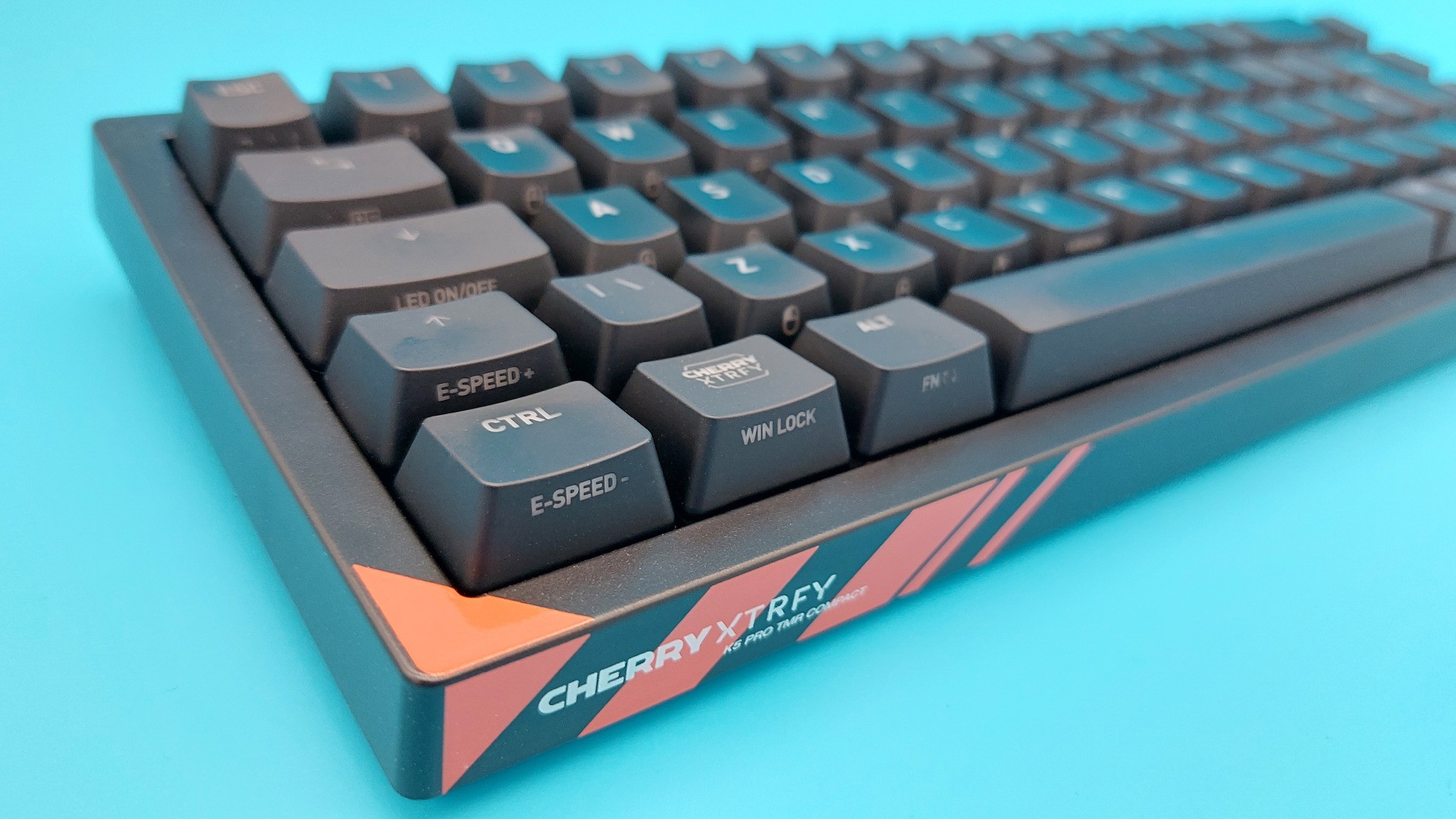
I'm not one for snap judgments, but when this keyboard first crossed my desk, I couldn't help but wrinkle my nose. My initial ire centred on the plastic construction and the pricing. To be fair to this 65% gaming keyboard, it's a sturdy bit of kit with minimal flex that also offers TMR switches. That magnetic tech's level of precision goes some way to justifying the $185/£140 price tag, but I wasn't sure if it went quite far enough.
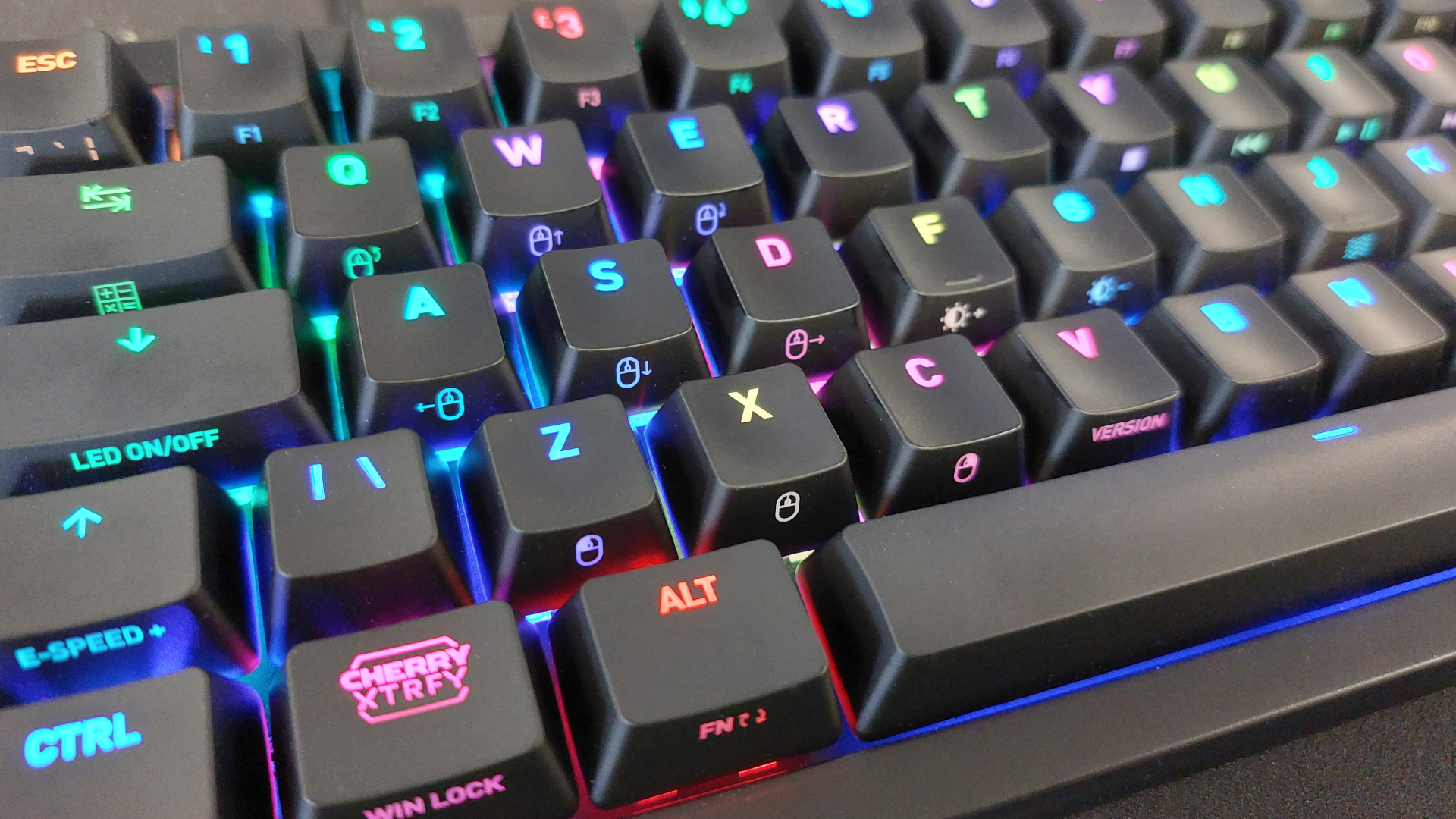
To state my own biases, the Cherry XTRFY K5 Pro TMR Compact couldn't be more different from the mechanical keyboard that I actually use every day, the Be Quiet Light Mount. Beginning with the obvious, the K5 Pro TMR is far smaller and far from quiet. The Cherry MK Crystal magnetic switches actuate cleanly and offer plenty of key clack—unfortunately, that comes with a pretty THUNK-y space bar that I do not care for.
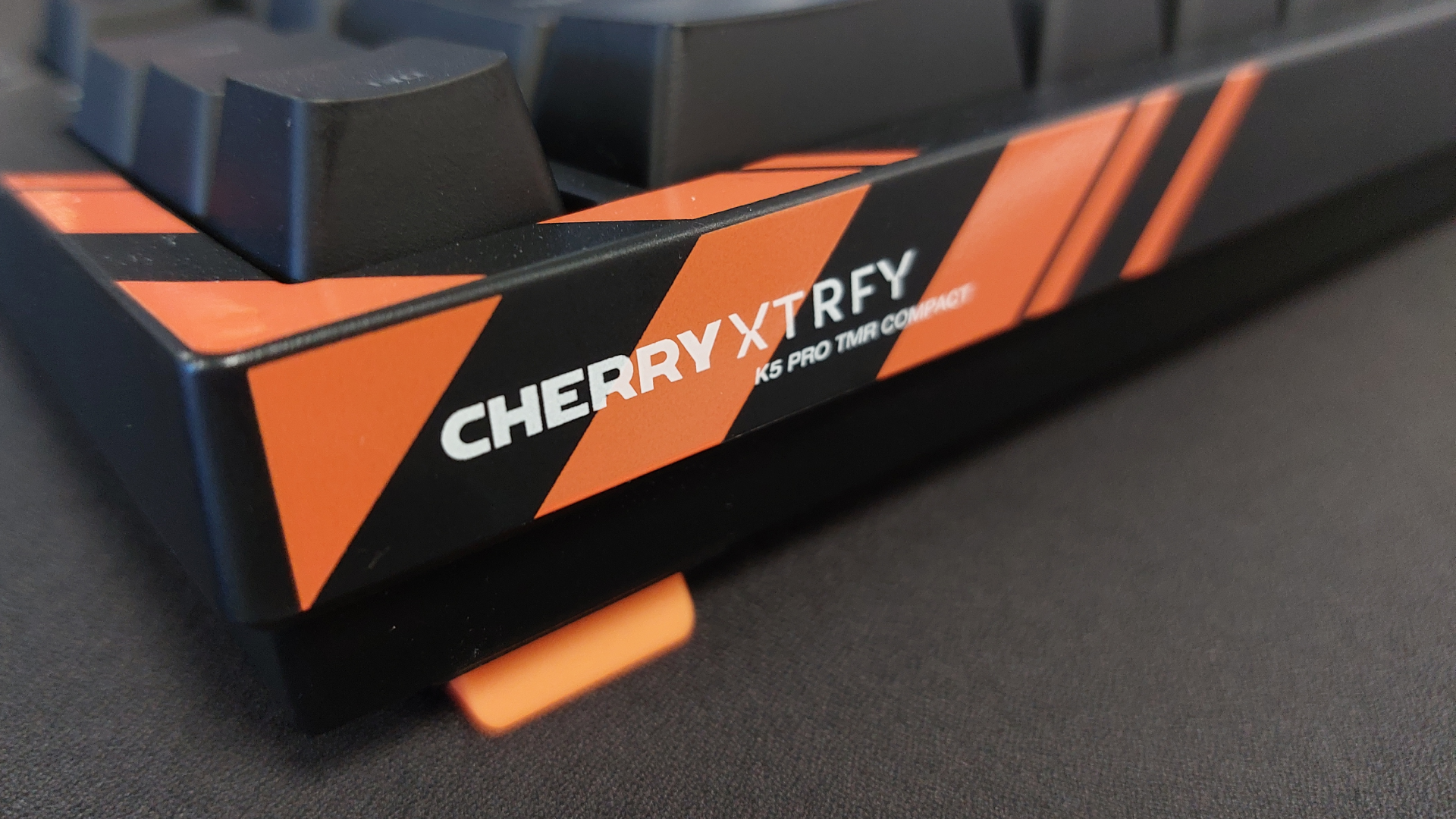
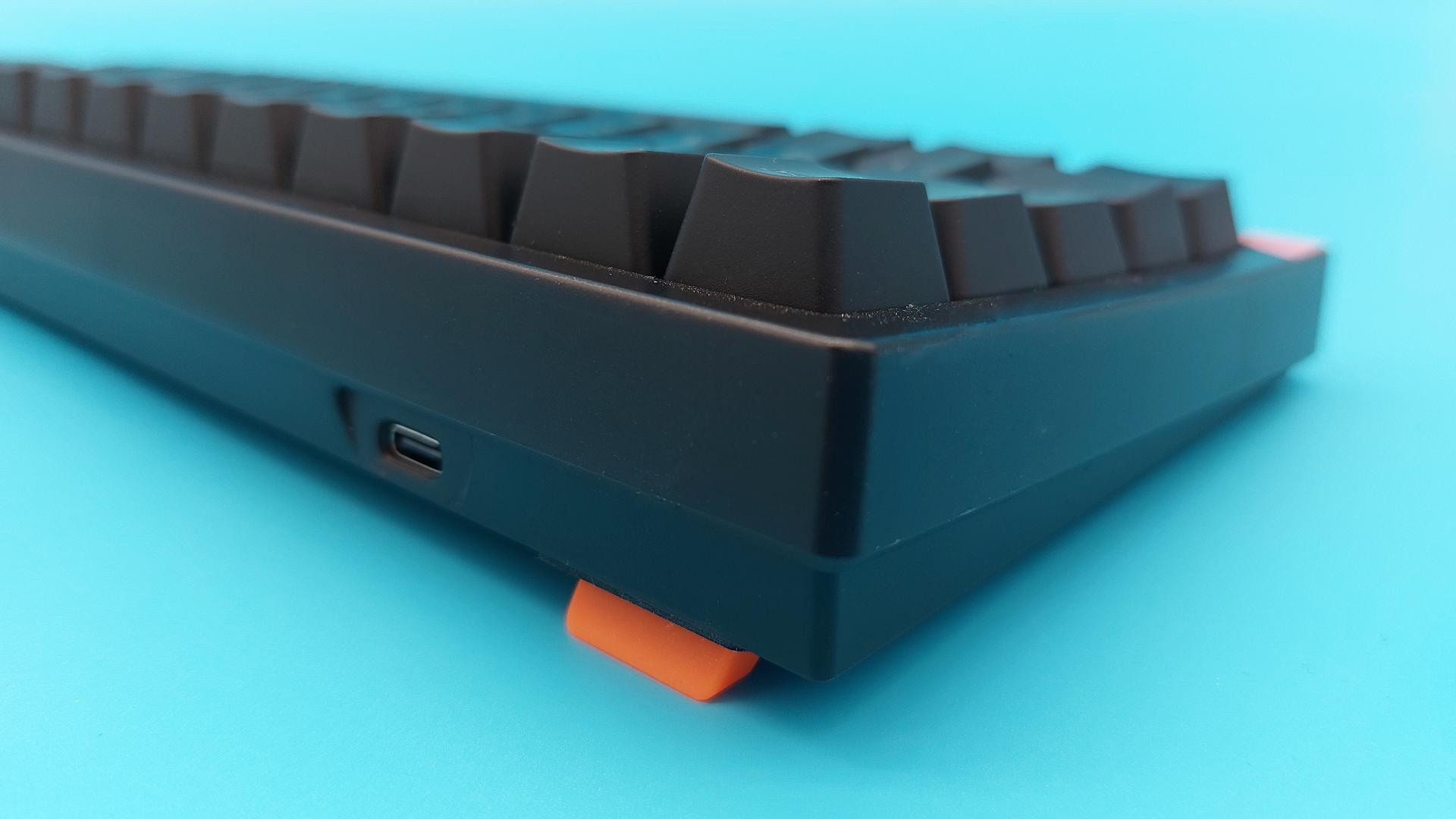
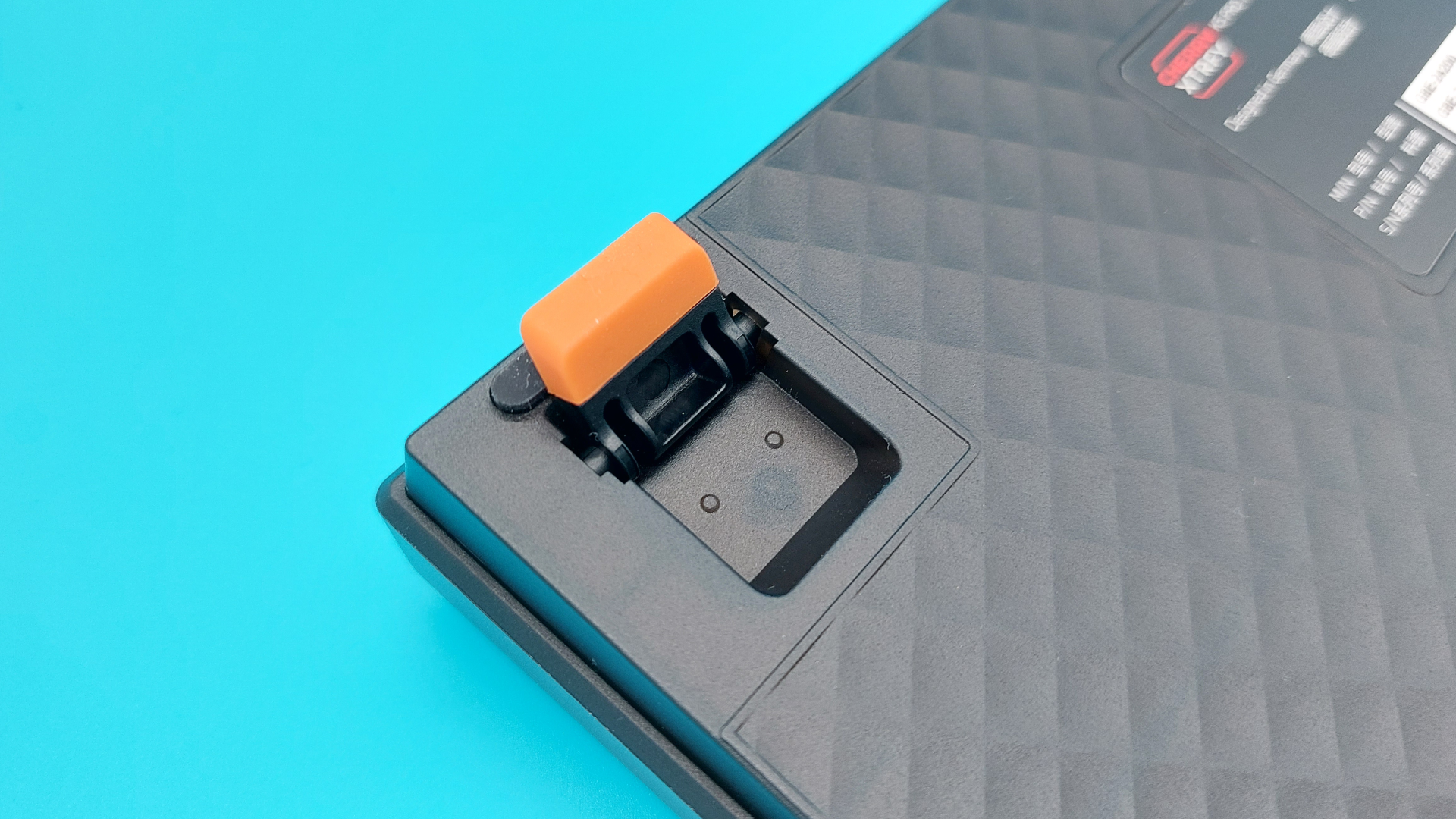
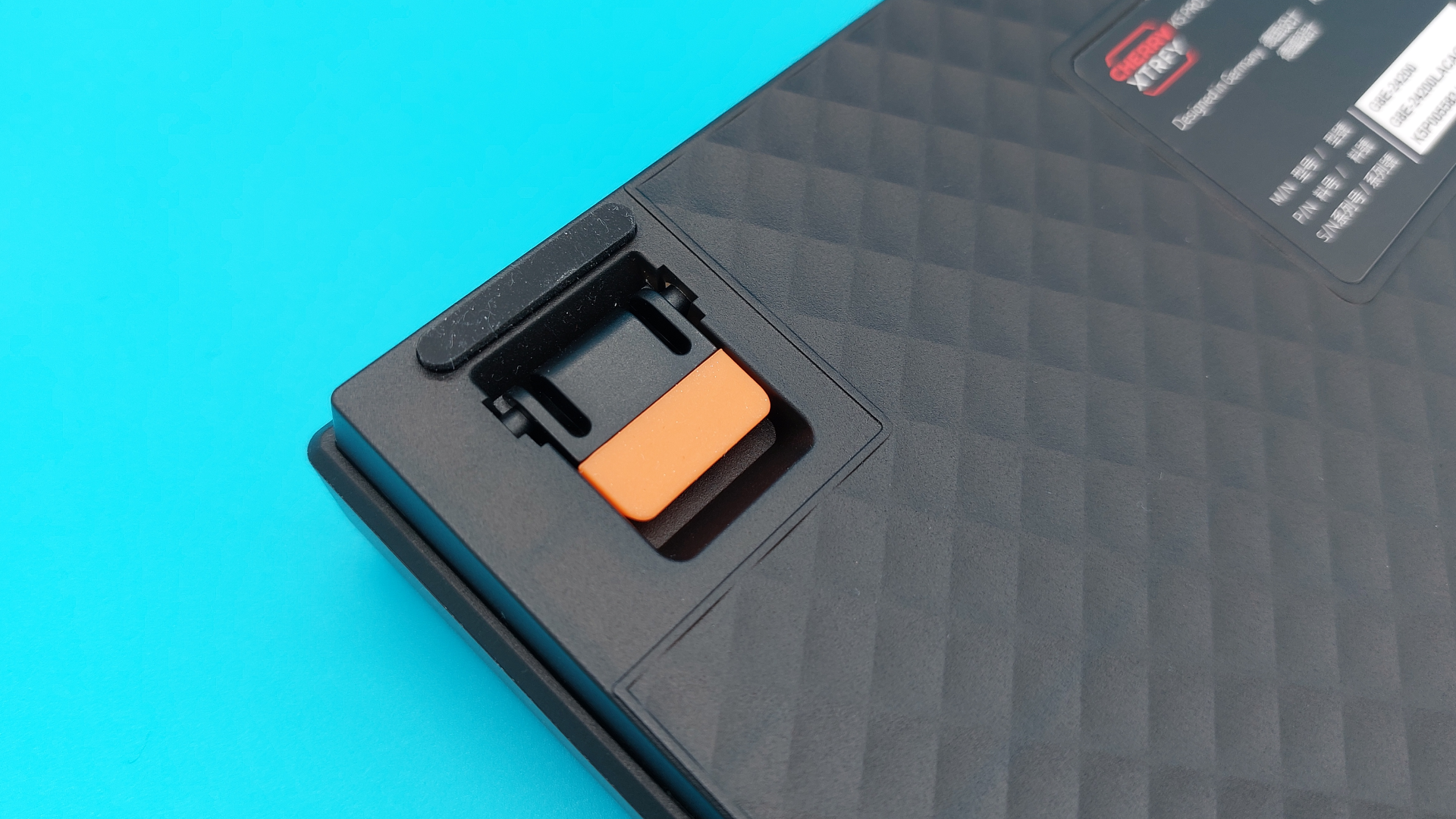
Add to that the fact that its orange stripe design and plastic construction pales in comparison to the Light Mount's brushed aluminium top plate, and you can see why I was so cool on it to begin with.
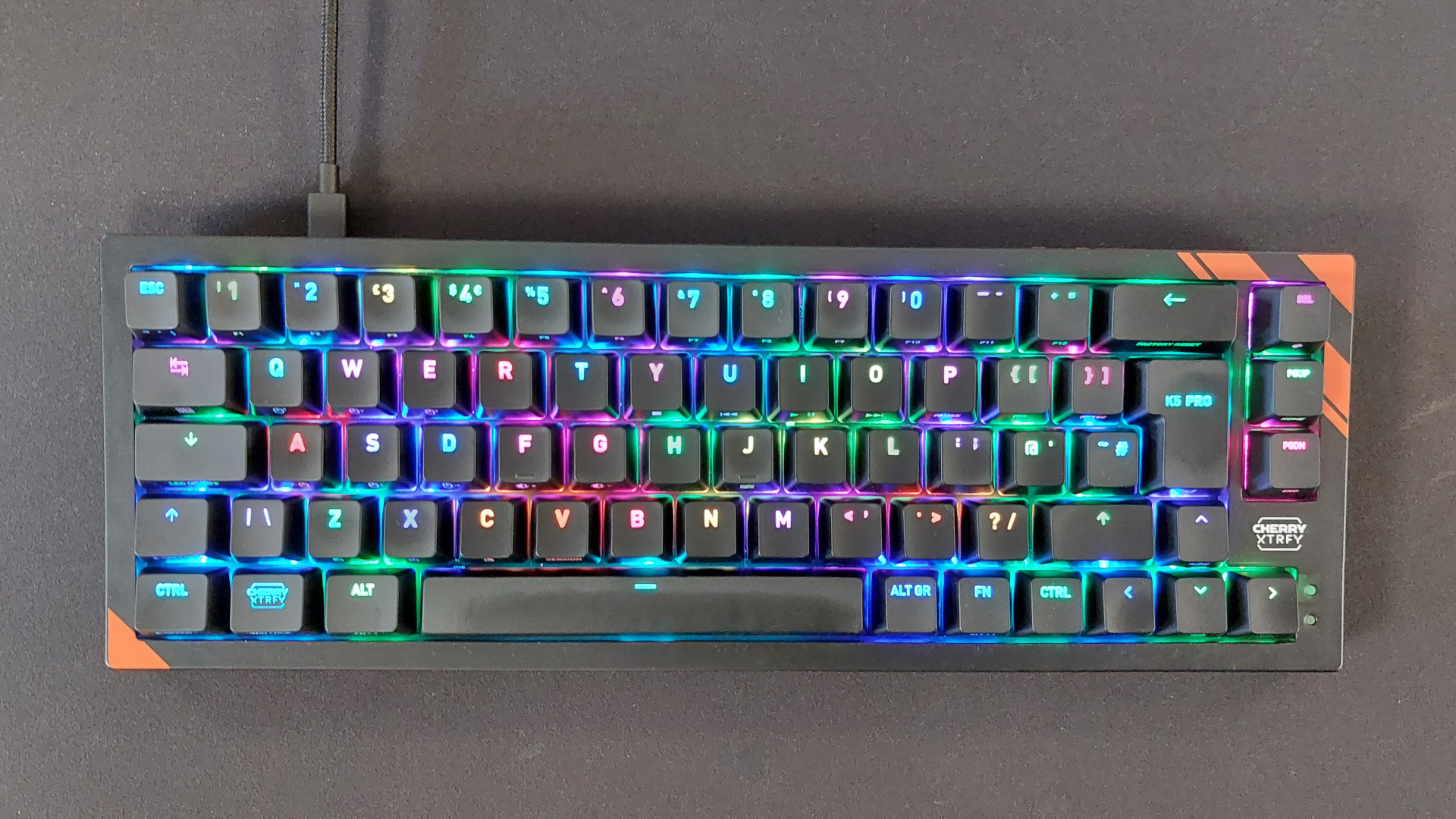
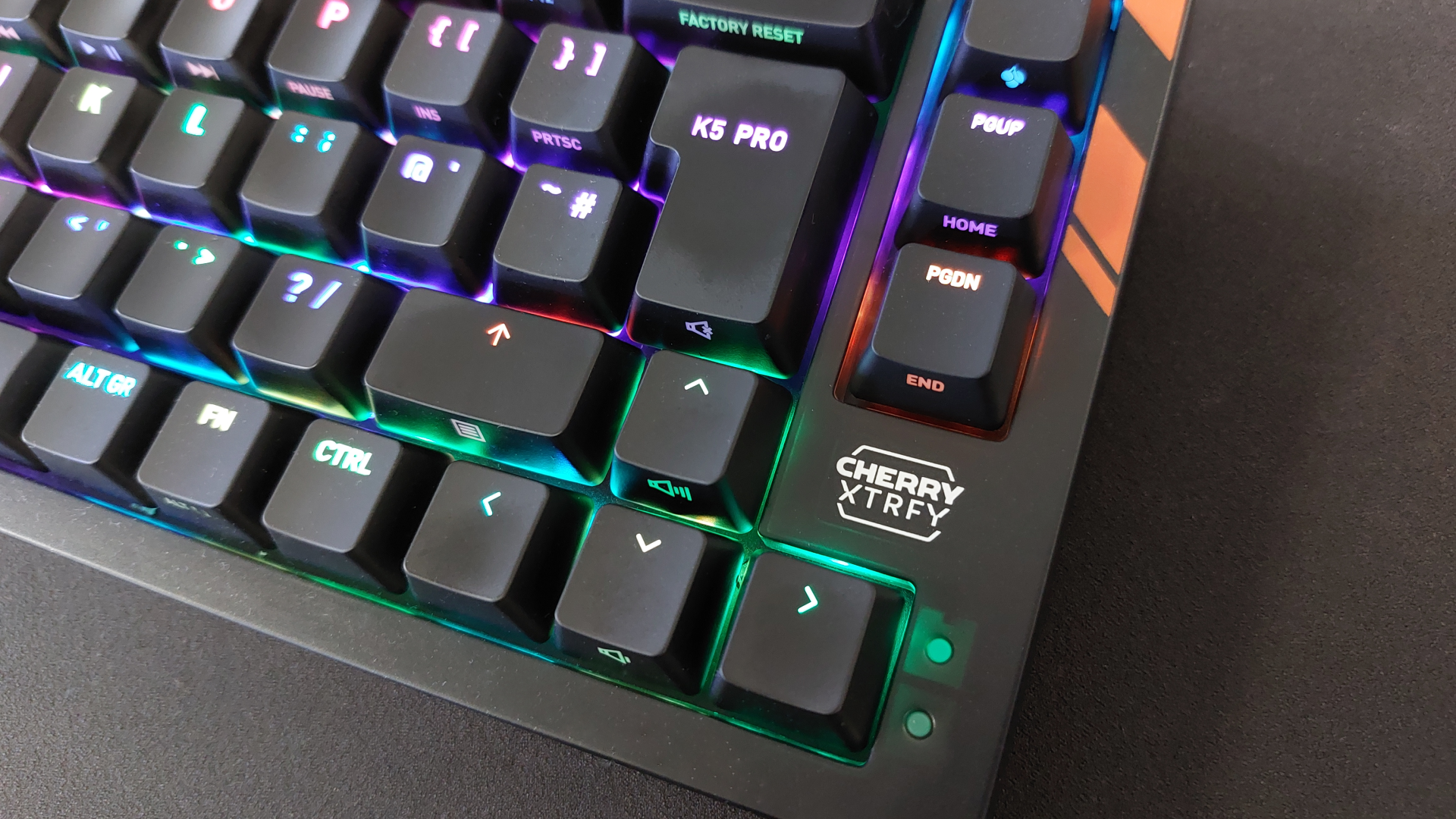
Mind you, Cherry isn't calling this 'compact' for nothing. As a 65% design, there's no numpad, dedicated macro keys, or pleasingly tactile media controls to speak of. Credit where credit is due, that allows the layout to feel far from cramped. The direction keys are shuffled inwards towards Enter and Control, with the left arrow key jutting out, but Delete, Page Up, and Page Down are given a few millimetres of breathing room to visually balance the design.
Cherry K5 Pro TMR Compact specs
(Image credit: Future)
Size: 65% Switches: Cherry MK Crystal Magnetic Connectivity: Wired, via 2-metre detachable USB-C to USB-A cable Keycaps: Thick ABS Hot-swappable switches: Yes Anti-ghosting: Yes Polling rate: Up to 8,000 Hz Dimensions: 335 x 120 x 40 mm Weight: 568 g Media controls: No Price: $185/£140
So far, so far from explosive, but it's this 'compact' design that began to persuade me I'd been a bit quick to judge. As I've previously written about, I have small hands that can make some handheld gaming PCs and peripherals fatiguing to use. As such, I tend to play shooters with a game pad even on PC—that's right, whenever I'm hiding in a bush in Arc Raiders, I am cowering on controller (specifically, the 8BitDo Ultimate 2C wireless controller in lilac).
The reason for this is that I tend to find it a bit uncomfortable to either stretch for the shift key on a full-size board or find I have to awkwardly concertina my pinky under my palm in order to run and gun on a smaller form factor keyboard. It turns out the Cherry XTRFY K5 Pro TMR Compact offers the perfectly spaced key layout for a weird baby-handed freak like me, allowing my pinky to relax more often than not as I elegantly kneeslide into a bush.
Unlike my daily driver keyboard, the Be Quiet Light Mount, the K5 Pro TMR Compact also offers a ton of gaming-geared features. For starters, TMR key switches offer a greater degree of precision and responsiveness than even the similarly magnetic tech found in Hall effect switches. On a wireless keyboard, they would be even more welcome as they're more power efficient too—however, a wired connection is the only way to play with the K5 Pro TMR Compact.
Mind you, for someone who'd rather skulk about the shadows of Stella Montis than go ham across Marathon's Tau Ceti IV, TMR switches don't present not a step up in responsiveness that I can readily appreciate; those with competitive esports ambitions will likely get the most out of the TMR switches here.
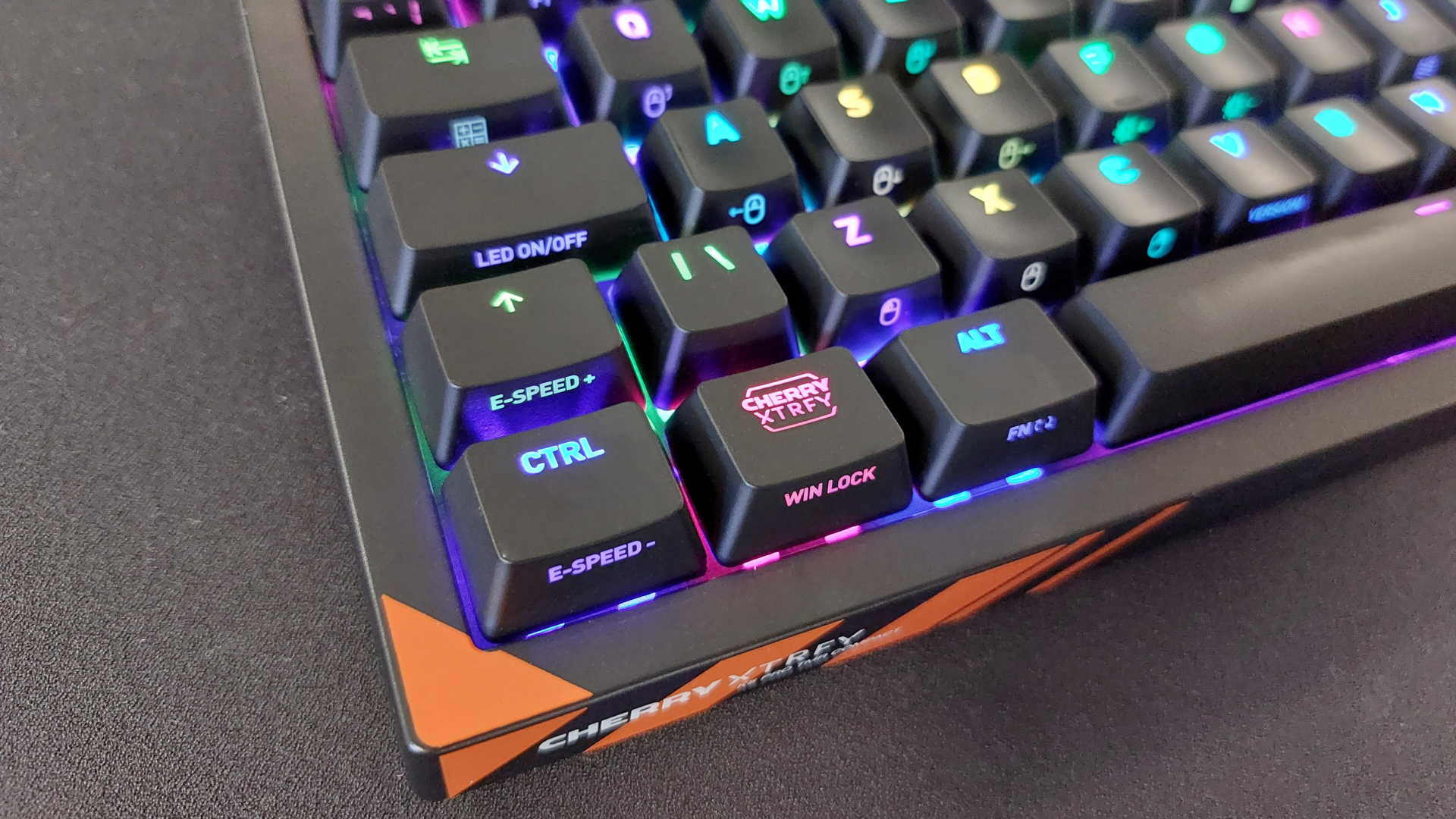
Cherry's Magcrate software also offers an impressive suite of customisation options. There, you can fiddle with everything from the lighting (I'm particularly fond of the 'color block' lighting profile as the ARGB reminds me of a fresh box of crayons), to key switch behaviour.
(Image credit: Future)
Thanks to the TMR switches, Magcrate includes customisable key actuation that can be set between 3.2 mm and 0.1 mm for all 68 keys. You can also tinker with a number of the usual gaming suspects, though they all have slightly different names to what you might expect. For instance, rapid trigger is referred to as 'Toggle Switch' here.
There's also SnapKey, allowing you to bind two keys so that, when both are pressed, only the last input registers. This is Cherry's take on Snap Tap/SOCD, the tech that's perhaps best known for enabling especially wiggly counter-strafing, and has been banned from Counter-Strike 2 since 2024.
FutureFutureFuture
As useful as the feature is, it's best to leave it off in competitive play, as you'll run the risk of a banhammer timeout in a number of games. Thankfully, you can store up to four onboard keyboard profiles, so you can easily set up something for both competitive play and singleplayer games.
The Cherry XTRFY K5 Pro TMR Compact also enjoys a surprisingly granular selection of polling modes. Tapping out at 8,000 Hz, you can alternatively set the keyboard's polling rate to 4,000, 2000, 1000, 500, 250, and all the way down to 125 Hz. As this is a wired keyboard with no battery power to savour, I'm not sure why you'd want to lower the polling rate below 1,000 Hertz, let alone down to 125, but the option is there for the sickos.
FutureFutureFuture
Optional quirks like this aside, the K5 Pro TMR Compact remains a feature-rich and comfortable keyboard—though the point of price has not once left my mind. At this point in time, $185/£140 feels like a lot for even a gaming keyboard…especially when I can secure a wireless keyboard that looks like a purple cat that is also a macaron for some reason for almost half that price (I've been dreaming about the Yunzii C98 Cake Meow ever since I first saw it, can you tell?).
But before I get too distracted with kitty keebs, let's compare and contrast the Compact to its recently released sibling, the Cherry Xtrfy MX 8.2 Pro TMR TKL. Both boards have TMR sensing with 0.01 mm precision, up to 8,000 Hz polling, and all the gaming-focused features you could want. However, the MX 8.2 Pro TMR TKL is a wireless keyboard with great build quality and 300 hours of battery life that will set you back $250/€230.
(Image credit: Future)
The tenkeyless board may appear the wrong side of gaudy for some, but it's definitely way more visually striking than the K5 Pro TMR Compact's understated black and orange look. Still, if you're only after the gaming features and a wireless board doesn't impress you much, the K5 Pro TMR Compact, for about $70 less, makes way more sense of the two.
Buy if...
✅ You've been waiting for a cheaper TMR gaming keyboard: The Cherry Xtrfy MX 8.2 Pro TMR TKL will have its fans, but the K5 Pro TMR Compact does many of the same things for less.
✅ You have small hands: The layout and spacing of this 65% gaming keyboard may be the gaming goldilocks zone for those with small mitts.
Don't buy if...
❌ You're on a tight budget: Though far cheaper than the Cherry Xtrfy MX 8.2 Pro TMR TKL, the K5 Pro TMR Compact is still kinda pricey considering you can get a Hall effect gaming keyboard for much less.
❌ You're a single-player stan: TMR offers a level of precision and responsiveness that many mere mortals outside of the competitive crowd simply won't appreciate.
But for even less than that, you could instead pick up the Keychron K2 HE, which is a 75% wireless keyboard with similarly responsive magnetic switches and, perhaps most importantly, a head-turning wood finish. I'm being only a little bit silly, but it is one of our top picks for the best gaming keyboards for good reason.
However, if you're on an extremely tight budget, the Gamakay x NaughShark NS68 is our best budget pick at only $40/£31. Before this review, it was my go-to whenever I was in-office at PC Gamer Towers because the typing experience is lovely, and it packs in many of the same gaming features as the Cherry XTRFY K5 Pro TMR Compact. To be clear, the NS68 is rocking Hall effect switches, which are arguably slightly less responsive than the Compact's TMR switches, though very few will feel the difference.
Otherwise, it's really tough to argue with an up to 8,000 Hz polling rate, customisable key actuation, Rapid Trigger, and yes, Snap Tap, all for less than 50 bucks. For that reason, the K5 Pro TMR Compact's $185/£140 price tag continues to be a stumbling block I'm not sure our blossoming relationship can quite overcome. But speaking of blossoming, I spy some foliage with my name on it—here's to one more buttery smooth kneeslide for the road.
Comentarii
Trimiteți un comentariu