Gabe Newell once said Steam wasn't 'the answer to digital distribution,' proving that even Gabe Newell is wrong about stuff sometimes
pe
Solicitați un link
Facebook
X
Pinterest
E-mail
Alte aplicații
Valve boss Gabe Newell has a history of being right about things, probably most famously about Steam itself: Making the platform an integral part of Half-Life 2, when most of the world insisted that digital distribution "will never happen," may be the single most impactful decision in the history of PC gaming. But he was a little bit off the mark eight years later, when he gave us his thoughts on what the future might hold—including, possibly, a world where Steam has been left in the dust by its competitors.
"There's always this temptation to assume that the way things are today is the way things are going to be, and having been through this long enough in the games industry, I think I and everyone at Valve know that you're only as successful as what you've done lately," Newell told us in an interview back in 2011. "So the idea that Steam is somehow the answer to digital distribution ignores the fact that every two or three years, something is going to change dramatically.
"It's like, along comes the Wii and that overthrows a bunch of ideas; along comes social gaming and that throws over a bunch of ideas. If you stand still and you're not doing the things that you need to do to be valuable in the future, you're going to be left behind really rapidly."
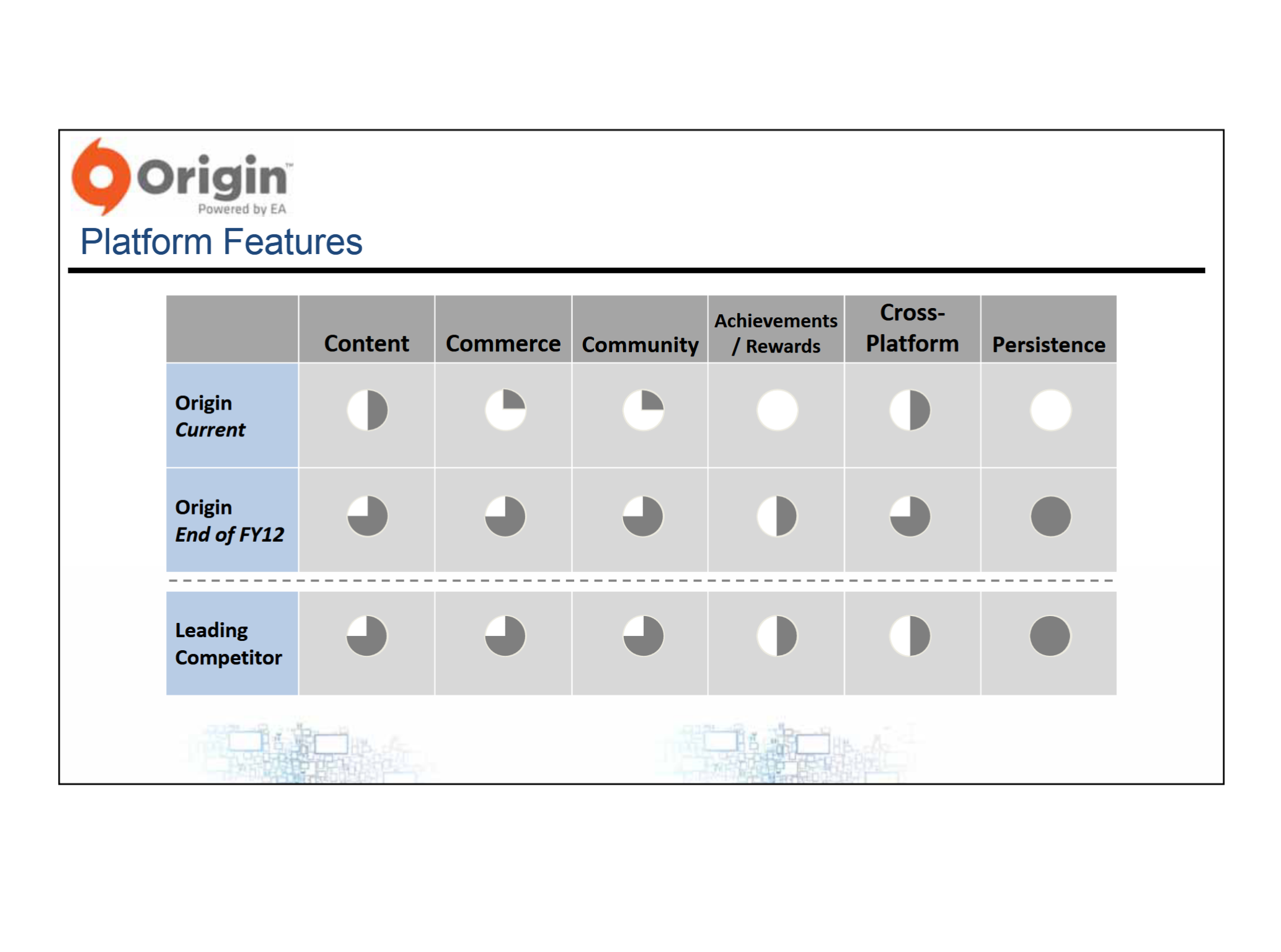
The up-and-comer in those days was Origin, Electronic Arts' own digital distribution platform, which EA had positioned that same year as a competitor to Steam: It even produced a chart, as part of a quarterly financial report, comparing Origin's current and future platform features with its "leading competitor," which, I mean, come on:
(Image credit: Electronic Arts)
Crysis 2It was also around this time that EA began making noise about peeling its games off of Steam: The removal of Crysis 2 and other games from Steam was explained as merely a minor policy conflict, but the suspect timing naturally led tongues to wag.
Reacting to that, Newell told us at the time that it was "incumbent on us to create value for those partners, whether it's EA or Ubisoft or Take-Two, or any of the other developers who are using it. That's our goal, so we're going to keep trying to do that with EA and trying to convince them that it's worth it to have their games on Steam."
Steam hasn't stood still in the 15 years since then, obviously, but I think it's fair to say that it is essentially in the same position it was then: massive, omnipresent, and too good to leave thanks to the powerful magic of Steam sales, which Newell cited as one major factor in Steam's success in particular. In the years since Epic tried to launch its own competitor, Steam has added a steady stream of new features rather than fighting for exclusives.
The world around Steam has most definitely changed, though: A decade after this interview ran, they'd all come crawlin' back to Steam: After dalliances of varying durations with their own storefronts and the Epic Games Store, EA, Activision, Ubisoft, and Take-Two all opted to kiss the ring.
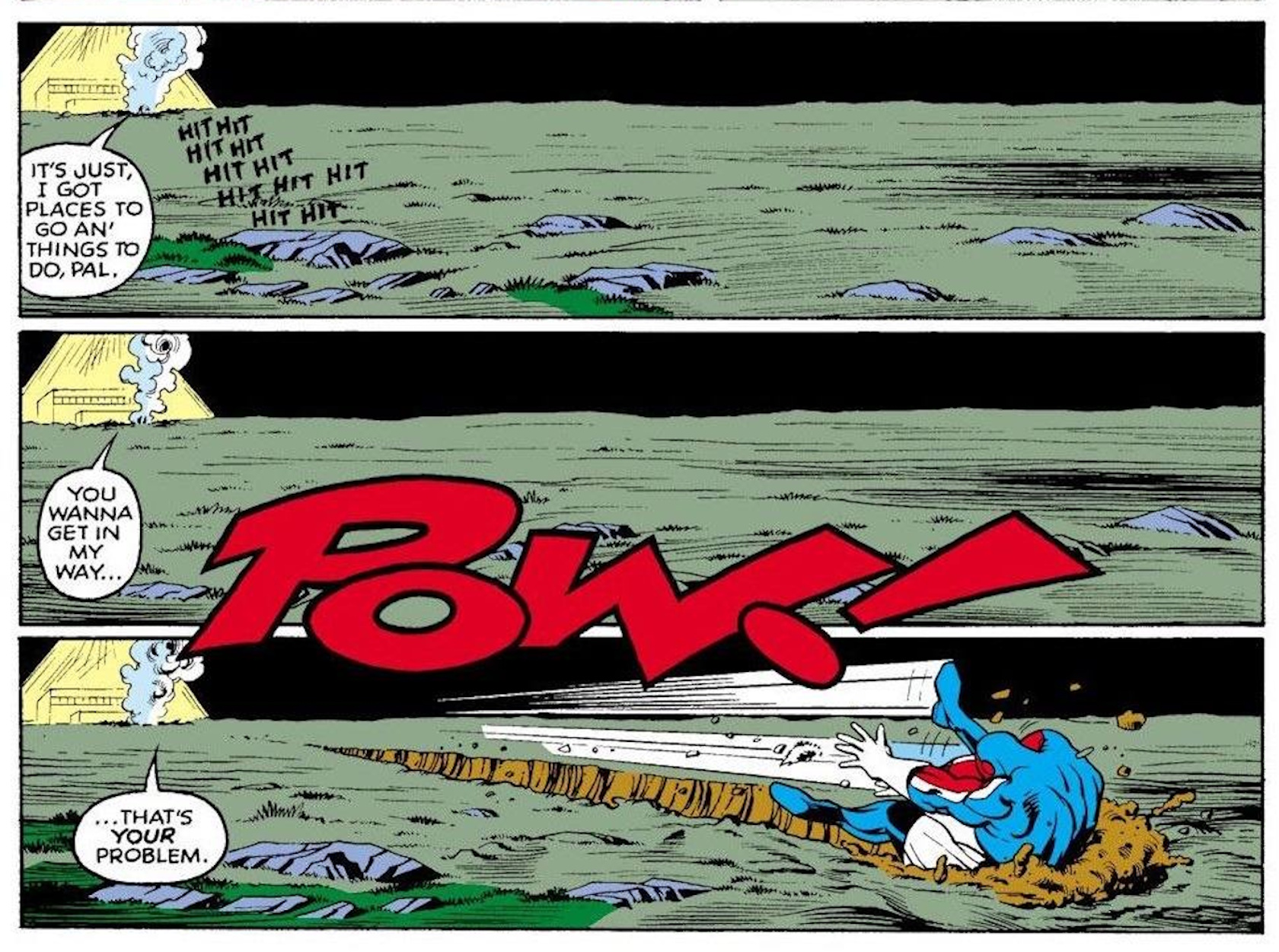
Even the mighty behemoth of Amazon got demolished by Steam, an ass-kicking made doubly funny by the fact that most of the world didn't even know there was a fight going on. It reminds me of the classic Excalibur throwdown between Captain Britain and the Juggernaut:
(Image credit: Marvel Comics)
Through it all, Steam has only entrenched itself more deeply, setting new concurrent user records every few months (most recently surpassing 42 million users) and adding thousands of new games to its library every year.
And all of this has happened despite Steam's refusal to meaningfully reduce what it takes from games sales: While both Epic and Microsoft take dramatically lower percentages on sales made through their storefronts, Valve has only fiddled slightly with Steam, and it continues to aggressively defend the 70/30 split it takes out of the gate. It speaks volumes that developers don't like it, but—like EA and the rest—they keep comin' back for it. Maybe Steam really was "the answer" after all.
Comentarii
Trimiteți un comentariu